
Buying security
tools is easy.
Running them is the job.
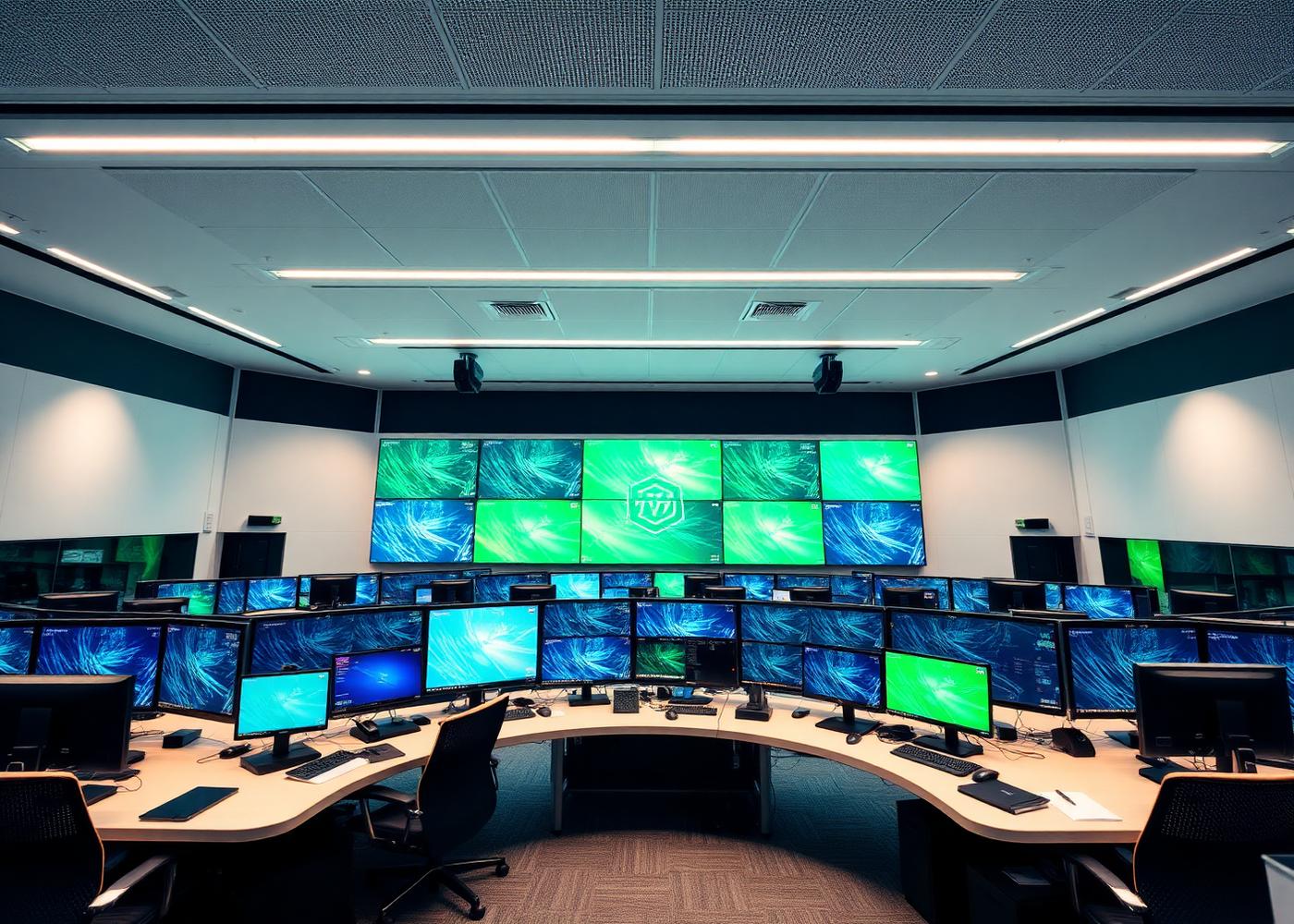
Almost every company we meet already owns good software. What they lack is someone awake at 3am to decide whether an alert matters. I2W supplies that team: analysts on shift every hour, watching your network, laptops, cloud and email — and acting the moment something is real.
- 24×7
- Analysts on shift, every day of the year
- 15 min
- Response promise on critical incidents
- 2M+
- Security events reviewed each month
- 10+
- Team certifications: OSCP, CISSP, CEH and more
68,412
Signals today
9
Escalated
0
Open P1
Why this happens
No company decides to go unwatched. It builds up quietly.
One tool bought after an audit. Another after a scare. A dashboard someone opened for a fortnight. Two engineers who each assume the other checks the alerts. Nothing went wrong on any single day — and yet the gap is now real, and an attacker only needs to find it once.
Too many alerts, too few judges
A mid-sized estate throws off thousands of signals a day. Two of them matter. Without someone qualified reading them, the important ones are simply lost in the pile.
A 24×7 rota is expensive
Covering nights and weekends properly takes six to eight analysts, plus tooling and training. That is several times the cost of an outsourced operations contract.
Regulators now ask for proof
The DPDP Act, CERT-In guidelines and ISO 27001 all assume continuous monitoring and retained logs. 'We take security seriously' is no longer an acceptable answer.
Attackers get weeks, not minutes
Intruders commonly sit inside a network for weeks before anyone notices. Every extra day widens the blast radius — and the eventual recovery bill.
What we run
Eight services. One phone number when something goes wrong.







How an engagement runs
Four steps from first call to a desk that never closes.
There is no twelve-week discovery phase. We look at what you have, agree who gets called when something breaks, rehearse it once for real, and then start operating.
- 01
A 45-minute conversation
What you run, what worries you, and what a bad week has already cost you. No slides and no product pitch — we are working out whether we can genuinely help.
- 02
Posture assessment
We examine the estate, compare it against a recognised framework and hand you a prioritised list of gaps. The report is yours to keep whether or not you buy anything.
- 03
Onboarding and a rehearsal
Log sources, agents, access and escalation contacts are agreed, then we run a live drill of a real incident before we call the service live. Untested escalation paths are decoration.
- 04
Steady-state operations
Monitoring, response and reporting run to a written SLA, with a quarterly review that changes the plan whenever your business changes.

Why clients stay
Named people, senior attention, no jargon.
You get a team, not a ticket portal
The same analysts learn how your business works, so they know that a finance login from Singapore at midnight is odd — and that your dev team really does run odd tools.
Tuning is the actual service
Forwarding alerts is easy and worthless. We are judged on how few reach you and how many of those turn out to be genuine.
Everything produces evidence
Incident timelines, monthly reports and control records are written as we go, because auditors, insurers and enterprise customers will ask for them later.
Nothing is locked away
Detection rules, runbooks and documentation belong to you and leave with you. We would rather earn the renewal than trap it.
Who we work with
Industries where an hour of downtime has a price tag attached.
BFSI & fintech
RBI and SEBI expect proof of monitoring, not intent. High transaction volumes make every minute of delay expensive.
Healthcare
Patient records, connected medical devices and a sector attackers target precisely because care cannot pause.
Manufacturing
Where plant networks meet office networks. A stopped line, not a leaked file, is usually the real loss.
SaaS & technology
Your buyers audit you before they sign. SOC 2 and clean pen test results shorten the sales cycle.
Retail & e-commerce
Payment surfaces, store systems and traffic peaks that arrive on the exact days you cannot afford an outage.
Logistics
Dozens of sites with little local IT, and delivery windows that turn a two-hour outage into penalties.
Education
Open networks, thousands of unmanaged devices and a security budget that has to justify itself every year.
Professional services
Client confidentiality obligations that continue long after the engagement has been invoiced.
Before you call
The questions every prospective client asks us.
Start here
What would an attacker reach first in your estate?
Our posture assessment answers that in about two weeks. You get a ranked list of real exposures, an estimate of the effort to close each one, and the report to keep — even if you never become a client. Most conversations start with a phone call and a question you have been putting off.